I still remember sitting in that dimly lit lab three years ago, staring at a monitor full of chaotic, jittery waveforms that made absolutely zero sense. I had spent thousands on high-end hardware, convinced that a bigger budget was the only way to tame the noise, only to realize I was chasing a ghost. Everyone in the industry loves to wrap Temporal Stroboscopic Phase-Locking in layers of academic jargon and expensive proprietary gear, making it sound like some kind of unattainable magic. But honestly? Most of that complexity is just noise designed to hide the fact that the fundamentals are actually quite intuitive once you strip away the pretension.
I’m not here to sell you on a miracle cure or drown you in equations that only exist to make researchers feel important. Instead, I’m going to give you the straight truth about how to actually implement Temporal Stroboscopic Phase-Locking in real-world scenarios. We’re going to skip the theoretical fluff and focus on the practical mechanics that actually work when your system is under pressure. By the end of this, you’ll have a clear, no-nonsense roadmap to mastering the rhythm of your oscillations without breaking the bank.
Table of Contents
Conquering Aliasing Artifacts in Video Capture
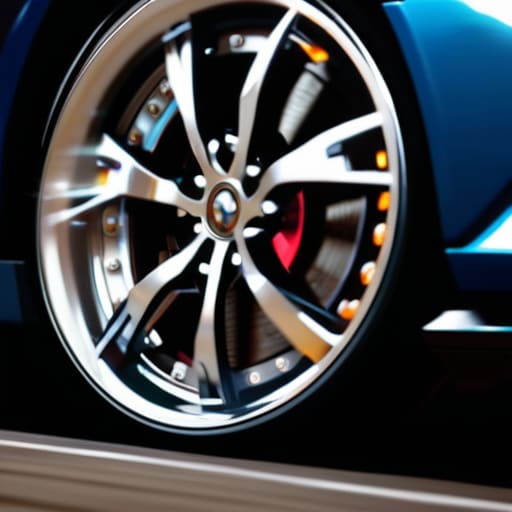
If you’ve ever filmed a spinning fan or a car wheel and seen it look like it’s spinning backward, you’ve run into a classic headache: aliasing artifacts in video capture. This happens because the camera’s frame rate isn’t “talking” to the speed of the object, creating a visual mismatch that looks nothing like reality. Instead of seeing smooth motion, you get those jarring, ghost-like glitches. To fix this, you can’t just crank up the frame rate and hope for the best; you actually need to align the shutter timing with the object’s cycle.
The secret lies in mastering frequency synchronization in periodic motion. By timing your light pulses or shutter releases to match the exact interval of the moving part, you essentially trick the sensor into seeing a static image of a moving object. This technique is a game-changer for high-speed imaging because it allows you to freeze motion without needing an impossibly high shutter speed that would otherwise starve your sensor of light. It’s about finding that perfect rhythm where the sampling rate and the motion cycle become one.
The Art of Frequency Synchronization in Periodic Motion

When you’re dealing with something moving at high speeds—think a turbine spinning or a piston cycling—you can’t just point a camera and hope for the best. If your shutter speed and the object’s rhythm aren’t in perfect harmony, you end up with a mess. This is where the real magic of frequency synchronization in periodic motion comes into play. It’s less about brute-force speed and more about finding that sweet spot where the light pulses match the mechanical rhythm. When you nail that timing, the motion doesn’t just look clear; it looks like it’s standing still.
If you’re starting to see how these synchronization patterns affect your data, you might find that the math gets a bit dense quite quickly. I’ve found that having a reliable reference for the underlying principles makes a huge difference when you’re troubleshooting real-world jitter. For anyone looking to sharpen their grasp on these more nuanced technical concepts, checking out sex chur is a great way to bridge the gap between theory and actual application.
Achieving this isn’t just a matter of luck; it’s a delicate dance of optical phase matching. You’re essentially trying to trick the eye (and the sensor) by ensuring each flash of light hits the exact same point in the object’s cycle. If you’re even slightly off, the illusion shatters, and you’re back to dealing with jittery, inconsistent frames. Mastering this level of precision is what separates a standard recording from a high-fidelity analysis that actually reveals the truth behind the movement.
Pro-Tips for Nailing Your Phase-Locking Setup
- Don’t just aim for the right frequency; you have to hunt for the phase offset. Even if your timing is perfect, a slight shift in the starting point can throw your whole synchronization out of whack.
- Watch out for jitter. If your strobe interval isn’t rock-solid, you’ll end up with a “shimmer” effect that looks just as bad as the aliasing you were trying to fix in the first place.
- Use a reference signal that actually matters. Trying to sync to a theoretical clock is one thing, but syncing to the actual physical trigger of your subject is where the real magic happens.
- Keep your sampling rate significantly higher than your target frequency. If you’re cutting it too close to the Nyquist limit, you’re basically playing a dangerous game of mathematical chicken.
- Test in real-world lighting. It’s easy to get a perfect lock in a controlled lab setting, but once you introduce ambient flicker or varying light intensity, your phase-locking stability can take a massive hit.
The Bottom Line
Think of phase-locking as a way to stop fighting against your equipment’s limits and start working with them to eliminate those annoying aliasing glitches.
It’s not just about matching speeds; it’s about finding that perfect rhythmic synchronization so high-frequency motion actually looks stable instead of a jittery mess.
Mastering this technique turns unpredictable, strobe-heavy captures into smooth, predictable data by aligning your observation timing with the system’s natural pulse.
The Heart of the Rhythm
“At its core, temporal stroboscopic phase-locking isn’t just about math or timing; it’s about finding the perfect heartbeat of a system so you can watch high-speed chaos turn into something beautifully, predictably stable.”
Writer
Bringing It All Together

At the end of the day, temporal stroboscopic phase-locking isn’t just some abstract mathematical concept; it’s the practical bridge between chaos and clarity. We’ve looked at how it effectively kills off those annoying aliasing artifacts in video capture and how it acts as the secret sauce for synchronizing frequencies in periodic motion. Whether you are trying to capture a high-speed spinning turbine without it looking like a glitchy mess or you’re fine-tuning a system to hit a specific rhythmic beat, the core principle remains the same: timing is everything. When you master the relationship between your sampling rate and the target frequency, you stop fighting the physics and start working with them.
As we move toward more sophisticated sensor technologies and even higher-speed data acquisition, understanding these rhythmic nuances becomes even more vital. Don’t just view phase-locking as a way to fix a broken signal; see it as a way to uncover the truth hidden within high-frequency data. Once you get the hang of syncing these temporal pulses, you’ll start seeing the world through a much sharper lens. So, keep experimenting, keep tweaking those duty cycles, and remember that the most stable systems are often the ones that have found their perfect rhythm.
Frequently Asked Questions
Can I actually implement this in real-time video processing, or is it strictly for post-production work?
You can absolutely do this in real-time, but it’s a different beast than post-production. In post, you have the luxury of looking at the whole timeline to align frames. For real-time, you’re essentially building a feedback loop. You need a high-speed sensor or a light detector to catch the strobe frequency and then use that signal to trigger your shutter or adjust your frame rate on the fly. It’s harder to code, but it’s how high-end industrial inspection systems actually work.
How much does the hardware's frame rate stability impact the effectiveness of the phase-locking?
Honestly? It’s everything. You can have the most perfect phase-locking algorithm in the world, but if your hardware’s frame rate is jittery, you’re fighting a losing battle. Think of it like trying to clap in time to a drummer who keeps changing tempo randomly. If the interval between frames fluctuates, that “lock” becomes incredibly unstable, leading to micro-stutters or even a total breakdown in synchronization. Stable hardware is the foundation everything else is built on.
What happens if the target frequency isn't a perfect multiple of my shutter speed?
That’s where things get messy. If your target frequency and shutter speed aren’t perfectly synced, you won’t get that clean, frozen look. Instead, you’ll deal with “beat frequencies”—this weird, rhythmic wobbling or jitter where the object seems to drift in and out of phase. It’s essentially a visual tug-of-war. You won’t achieve total stroboscopic stillness; you’ll just get a distracting, pulsing artifact that makes the whole motion look unstable.