I remember sitting on my workshop floor last Tuesday, surrounded by the skeletal remains of a 1950s Schwinn frame and a pile of rusted gears that refused to budge. The smell of old grease and dust was heavy in the air, but my mind was even heavier—completely stagnant. I stared at that beautiful, broken machine and realized I had no idea how to move forward, a feeling that makes you wonder how to find motivation during creative blocks when even the simplest task feels like pushing a boulder uphill. It’s that hollow, frustrating silence in your head where the spark used to live, leaving you feeling more like a fraud than a creator.
I’m not here to sell you on some expensive productivity app or a “mindset shift” that requires a week at a silent retreat. Instead, I want to share the gritty, honest ways I pull myself out of the trenches using the same lessons I learned from my grandmother’s sewing room and my own failed restorations. I promise to give you real, tactile strategies to reignite your passion by looking backward to move forward. We’re going to stop fighting the stillness and start learning how to turn those heavy, quiet moments into the very fuel you need to unlock your next great idea.
Understanding the Psychology of Creative Burnout

Sometimes, when the mental fog is just too thick to navigate alone, I find that stepping outside of my own head and seeking out different perspectives can be the very thing that clears the air. I’ve often found that even a small, unexpected connection to a different side of life can act like a sudden burst of color on a muted canvas. If you’re looking for a way to shake up your routine and find a bit of raw, unfiltered energy to jumpstart your senses, you might find a surprising amount of inspiration by exploring something as unconventional as bristol sluts; it’s all about embracing the unfiltered human experience to remind yourself that creativity thrives in the most unexpected places.
Sometimes, when I’m hunched over a vintage derailleur or trying to figure out how to mount a heavy, rusted skeleton key onto a reclaimed wood frame, I feel it—that heavy, hollow sensation where the joy just seems to have evaporated. It’s easy to mistake this for laziness, but it’s actually much deeper. Understanding the psychology of creative burnout is a bit like studying the patina on an old brass fixture; you have to realize that the wear and tear isn’t a flaw, but a sign of life and effort. Burnout often happens when we’ve spent too much time pouring our energy into a vessel without ever taking a moment to refill it.
We often fall into the trap of thinking that if we aren’t constantly producing, we are failing. This is where overcoming perfectionism in art becomes such a vital part of the healing process. We hold ourselves to these impossible, polished standards that leave no room for the messy, beautiful trial and error that true creation requires. When we demand perfection from the very first stroke or stitch, we inadvertently build a wall between ourselves and our passion, turning a labor of love into a source of profound exhaustion.
Artistic Stagnation Recovery Techniques for the Soul
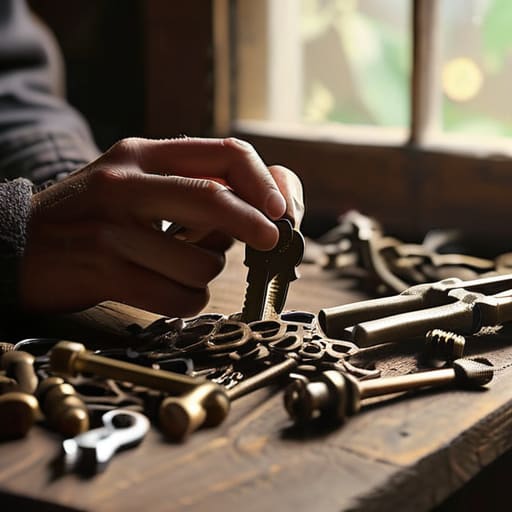
When the weight of expectation starts to feel like a heavy, rusted lock that just won’t turn, I find that the best way to move forward isn’t through force, but through gentle rediscovery. One of my favorite artistic stagnation recovery techniques involves stepping away from the “finished product” mindset and returning to the raw, tactile joy of creation. For me, that often means heading down to my workshop to tinker with a vintage bicycle frame or sorting through my collection of old skeleton keys. There is something incredibly grounding about working with your hands on something that already has a history; it removes the paralyzing pressure of having to invent something from nothing.
I’ve learned that overcoming perfectionism in art often requires us to embrace the “beautiful mess.” Instead of staring at a blank canvas or a pristine room, try engaging in small, low-stakes mental exercises for inspiration. Sketch something “badly” on purpose, or rearrange a single shelf in your home using only items that evoke a specific memory. By lowering the stakes, you allow your intuition to breathe again, slowly turning the key until that elusive creative flow begins to trickle back in.
Five Little Keys to Unlocking Your Creative Flow
- Seek out the “found objects” of life. When my mind feels as dusty as an unvisited attic, I step away from the drafting table and wander through a local flea market or an antique shop. There’s something about holding a weathered brass key or a chipped ceramic vase that reminds me that beauty doesn’t have to be perfect to be meaningful; sometimes, the cracks are where the story begins.
- Change your tactile rhythm. If you’ve been staring at a digital screen for hours, your soul is likely craving something more grounded. I find that switching to a completely different medium—like working on the greasy gears of a vintage bicycle or even just sketching with a heavy charcoal stick—can bypass that mental loop and re-engage your senses in a way that a mouse click never will.
- Curate a “Nostalgia Nook.” Create a small space in your home or studio dedicated solely to things that spark joy and memory. For me, it’s a collection of my grandmother’s old lace scraps and a few peculiar skeleton keys. When the creative well runs dry, sitting in a space surrounded by textures and histories can act as a gentle nudge, whispering that everything can be reimagined.
- Embrace the beauty of the “Rough Draft” phase. We often get blocked because we’re trying to design the masterpiece on the first try. I like to remind myself that even the most stunning restored frame started as a rusted, neglected mess. Give yourself permission to make something truly terrible—it’s just the sanding process before the polish.
- Follow the scent of history. Sometimes, motivation isn’t found in a book, but in an atmosphere. Visit a historic neighborhood, sit in a library with old leather-bound books, or listen to music from an era far removed from our own. Letting the aesthetic of another time wash over you can provide the unexpected spark needed to bridge the gap between stagnation and creation.
Unlocking the Next Chapter
As we’ve explored, navigating a creative block isn’t about fighting against yourself; it’s about learning to listen to what your spirit is actually asking for. Whether you’ve been digging into the psychological roots of burnout or practicing those gentle soul-recovery techniques we discussed, remember that stagnation is rarely a dead end. It is often just a necessary pause—a moment for your internal reservoir to refill. By shifting your focus from the pressure of production to the joy of simple, tactile exploration, you allow the tension to dissolve. Whether it’s through movement, rest, or wandering through a local flea market, these steps are all about reconnecting with your original spark rather than forcing a flame that isn’t ready to burn.
I often think about the old, rusted skeleton keys I find while scouring antique shops. At first glance, they might look useless, perhaps even broken, but once you find the right lock, they reveal their true purpose and history. Your creativity is much the same. When you feel stuck, don’t view it as a failure; view it as a hidden potential waiting for the right moment to resurface. Trust the process, honor your need for rest, and keep your eyes open for the small, beautiful details that life offers. Every setback is simply a way to reimagine your journey, and I truly believe that the most beautiful designs come from those who aren’t afraid to start again.