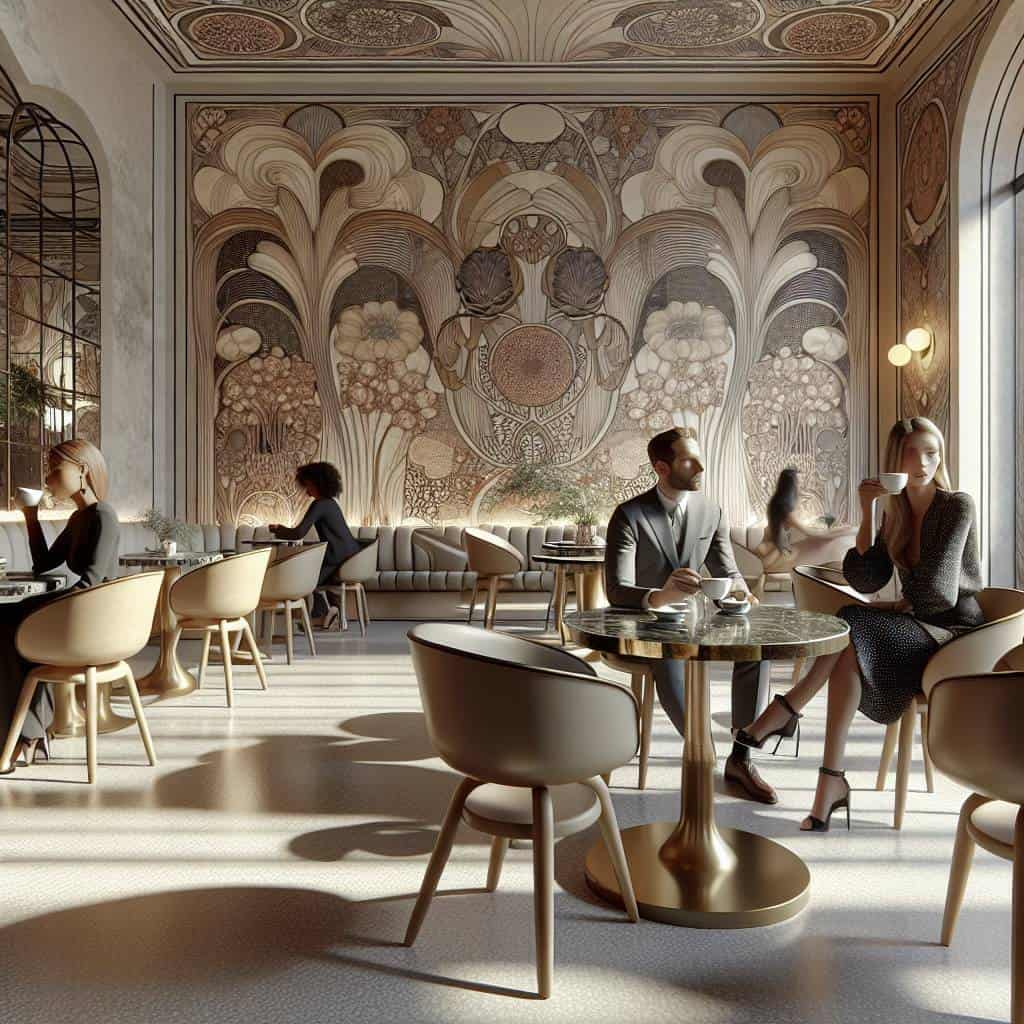
I once found myself at a swanky design conference, sipping on overpriced espresso and pretending to care about the speaker’s monotone tribute to Art Nouveau. My mind wandered, as it often does, to the absurdity of it all. Here we were, a group of self-proclaimed visionaries, nodding along to stories about how a movement once seen as radical is now being reduced to wallpaper patterns in hipster cafes. The irony wasn’t lost on me. I couldn’t help but chuckle at how these grandiose movements—the Bauhaus rebels and Swiss puritans—have been tamed and commodified, their wild ideas now neatly packaged for mass consumption. It made me question if we truly understood the chaos and rebellion that birthed them or if we were just playing dress-up in history’s wardrobe.
So, here’s the deal. In this article, I’m not just going to regurgitate dates and names like a history textbook on autopilot. No, we’re going to peel back the layers and examine how these movements like Bauhaus, Swiss, and Postmodernism, among others, didn’t just shape aesthetics—they challenged entire paradigms. We’ll dig into the context, the backlash, and the ripple effects that still influence our design choices today. Expect a candid exploration of how these movements have both dazzled and disappointed, and why understanding their roots is crucial for any designer worth their salt. Buckle up; we’re about to embark on a journey through the tangled web of art and revolution.
Table of Contents
When Swiss Precision Met Postmodern Chaos: My Artful Journey
Picture this: a tightrope walker, one foot meticulously placed in the world of Swiss Design, the other dancing precariously over the swirling abyss of Postmodernism. That’s me, wobbling but never falling, balancing the unyielding precision of Swiss grids with the anarchic frenzy of postmodern chaos. Swiss Design, with its clean lines and disciplined structure, was my well-behaved child. It whispered sweet nothings of order and clarity in my ear, promising that every pixel could find its perfect home. But then came Postmodernism, that unruly teenager, kicking down the doors of convention and demanding a revolution. It was loud, messy, and unapologetically bold—a cacophony of colors and shapes that defied logic and sneered at tradition.
Embracing both worlds wasn’t a choice; it was an artistic necessity. In the heart of the metropolis, where I craft my visual symphonies, the clash of these two ideologies creates a rhythm that mirrors the city’s pulse. Bauhaus might have tried to strip design down to its bare essentials, but I wanted to add layers, to complicate the narrative. It’s messy, yes, but it’s also exhilarating. The Swiss might have insisted on harmony, but I found beauty in discord. Each project became a canvas where I could juxtapose the stern geometry of Swiss principles against the wild, unpredictable strokes of Postmodernism. It was in this chaotic dance that I found my voice—a voice that refuses to be pigeonholed, that thrives in the tension between order and chaos.
So here I am, on this artful journey, inviting you to step off the beaten path and join me in this adventure. Let’s shun the banal and celebrate the beautiful unpredictability of design. Because in the end, it’s not about choosing sides. It’s about embracing the chaos and the precision, and finding a place where both can coexist—where every line, every color, every space tells a story worth hearing.
When Grids Became Gospel
Swiss Design wasn’t just a movement; it was a revolution wrapped in precision. Grids became the new gospel, and for a while, we all prayed at the altar of order and clarity. But let’s not forget—chaos is where the magic happens.
The Chaotic Symphony of Design
As I step back from the canvas of design history, what strikes me is how these movements—Bauhaus, Swiss, Postmodernism—are less like chapters in a dusty textbook and more like frenetic jazz solos, each riffing off the last, clashing and harmonizing in unexpected ways. It’s a chaotic symphony, a cacophony of ideas that somehow resolves into something beautiful. Bauhaus threw a spanner in the works with its stark rebellion, Swiss Design brought order with its grid obsession, and Postmodernism? Well, it just laughed in the face of tradition and built castles out of irony. They’ve each left their mark on my art, shaping and reshaping my vision in ways I never anticipated.
But here’s the thing—these movements aren’t just relics of the past. They’re living, breathing entities that continue to influence and inspire. In my work, I see the traces of their chaos and precision, their boldness and restraint. Each project is a dialogue with these ghosts of design history, a negotiation between their rigid doctrines and my restless creativity. And as I look towards the future, I’m not just carrying their legacy forward; I’m twisting it, bending it, and making it sing in new and unexpected ways. Because that’s what design is all about, isn’t it? It’s the art of weaving the past into the present, of taking the familiar and making it shockingly new.