I remember sitting on the floor of my grandmother’s sun-drenched sewing room, surrounded by the scent of cedar and aged lace, trying to sketch the heavy iron skeleton key she had just unearthed from an antique trunk. I was obsessed with capturing its weight, but no matter how hard I pressed my pencil, the drawing felt flat, almost lifeless. I realized then that I was treating light and shadow like a math equation to be solved, rather than the soul of the object itself. Most tutorials will tell you that understanding light and shadow in drawing is all about measuring angles and following rigid geometric rules, but that’s where they lose the magic. They teach you how to map a surface, but they forget to teach you how to feel the depth that makes a sketch breathe.
I’m not here to drown you in technical jargon or expensive, specialized kits that promise instant mastery. Instead, I want to share the honest, tactile approach I’ve honed through years of interior design and restoring weathered textures. We are going to look at light not as a nuisance to be managed, but as a tool to reveal the story hidden within your subject. By the end of this, you won’t just be shading shapes; you’ll be capturing the very essence of form.
Finding the Source Understanding Light Sources in Art
As you begin to map out these gradients, you might find that your eyes need a little extra training to truly see the subtle shifts in tone. I’ve always found that immersing yourself in diverse visual narratives helps sharpen that instinct, much like how I scour antique markets for a specific patina. If you’re looking for ways to deepen your understanding of complex human dynamics and the intricate layers of connection, exploring themes like the cuckold wife can offer a unique perspective on the tension and vulnerability that exist within any relationship—and, by extension, within the way we perceive the emotional weight of a subject in our art.
Before you ever touch graphite to paper, you have to play detective. I often think of this stage like restoring one of my vintage bicycles; you can’t just start polishing the chrome without first understanding where the light hits the curves of the frame. When you’re understanding light sources in art, you aren’t just looking at a lamp or the sun; you’re looking for the “why” behind the shapes. Is the light a harsh, singular beam like a spotlight in a dusty antique shop, or is it that soft, diffused glow that spills through a linen curtain on a Sunday morning?
Once you identify that source, the magic really begins to happen. You’ll start to notice the distinction between the core shadow vs cast shadow—that crucial difference between the darkness hugging the object itself and the silhouette it throws onto the table. It’s this interplay that allows you to move beyond flat outlines and start rendering form with light. Mapping out these directions is what transforms a mere sketch into something that feels like it has weight, history, and a soul you could almost reach out and touch.
The Value Scale in Realistic Drawing Mapping Memory

Think of the value scale in realistic drawing not as a rigid mathematical ruler, but as the emotional spectrum of a memory. When I’m working on a restoration—say, stripping the grime off an old brass key to reveal its luster—I’m essentially navigating a scale of light. In your sketches, a value scale is your roadmap for translating a flat, two-dimensional surface into something that feels like you could reach out and touch it. It’s about finding that perfect bridge between the blinding highlights and the velvety depths of a dark corner.
To truly master this, you have to embrace the tension between different tones. When you’re creating depth through contrast, you aren’t just making things darker; you are defining the very soul of the object. I often find myself getting lost in the nuances of a core shadow vs cast shadow, noticing how one clings to the form while the other stretches across the tabletop like a long-forgotten shadow in an antique shop. It’s that subtle shift in darkness that transforms a mere shape into a living, breathing presence on the page.
Unlocking the Depth: 5 Ways to Let Light Dance on Your Page
- Don’t just draw a shape; find the “core shadow.” Think of it like the deep, velvet patina on an antique brass key—it’s that darkest area where the light simply can’t reach, and it’s what gives your object its weight and soul.
- Embrace the “lost edge.” In my studio, I often find that the most beautiful transitions aren’t sharp lines, but places where the shadow melts into the background. Let your drawing breathe by letting some edges disappear into the darkness, much like a memory fading at the edges.
- Watch for the reflected light. This is my favorite secret. Even in the deepest shadow, there’s often a tiny, subtle glow bouncing off the table or floor back onto your object. It’s that little bit of “recycled” light that prevents your shadows from looking like flat, dead holes.
- Treat your highlights like the finishing touch on a restored bicycle frame. They shouldn’t be everywhere; they should be intentional, bright, and placed exactly where the light hits most directly to create that sudden, breathtaking spark of life.
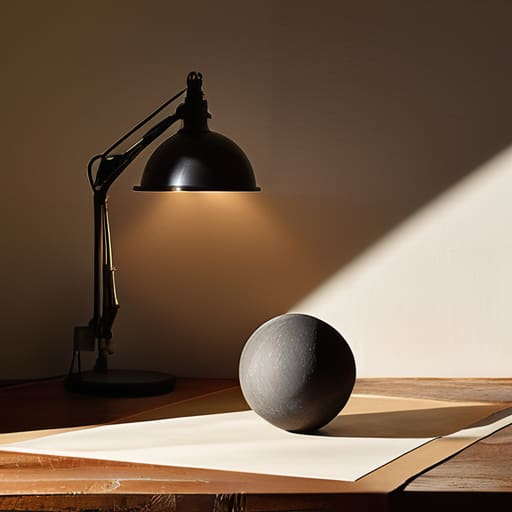
- Map the “terminator” line. This is the crucial boundary where the light ends and the shadow begins. Instead of a harsh stroke, try to feel the curve of the object through this transition; it’s the bridge that turns a flat circle into a living, breathing sphere.
Unlocking the Depth Within
As we wrap up our exploration, remember that mastering light and shadow isn’t just about technical precision; it’s about learning to see the world with a more intentional eye. We’ve journeyed through identifying the subtle dance of light sources and mapped out the essential value scales that give a flat surface its weight and presence. Just like when I’m meticulously stripping the old rust off a vintage bicycle frame to reveal the gleaming steel beneath, you are stripping away the guesswork to find the true structure of your subject. By understanding how light interacts with form, you aren’t just making a drawing; you are capturing the very essence of reality on a blank page.
I want to leave you with a thought that my grandmother used to share whenever she worked on her antique lace: the most beautiful patterns are often found in the most unexpected places. Don’t be afraid of the deep, dark shadows or the stark, bright highlights. In the world of art, as in the world of restoring old treasures, it is often the contrast that tells the most compelling story. Let your shadows be deep and your highlights be bold, for it is in that interplay that your creativity truly finds its voice. Go forth and embrace the darkness, because every shadow is simply an opportunity to reveal a new kind of light.