I remember sitting on the floor of my grandmother’s sun-drenched sewing room, surrounded by the scent of cedar and aged linen, trying desperately to mimic the precise, polished strokes of the artists in my textbooks. I thought that if I could just master the “rules” and replicate perfection, I would finally find my voice, but all I ended up with was a collection of hollow imitations. We are often told that finding your creative identity is some mystical, unreachable peak, but the truth is that searching for how to develop a unique art style by looking only at what is currently “trending” is like trying to restore a vintage bicycle using only plastic parts; you might get it moving, but you’ll never find its soul.
I’m not here to give you a list of superficial hacks or tell you to buy expensive software to “fix” your vision. Instead, I want to show you how to look backward to move forward—how to scavenge your own history, your favorite textures, and even your “mistakes” to build something truly yours. We are going to dive into the process of intentional reinvention, using the lessons I’ve learned from years of breathing life into forgotten objects to help you unlock a signature that feels as authentic as a weathered brass key.
Finding Your Artistic Voice Through the Wisdom of History
Sometimes, the most profound inspiration doesn’t come from a dusty museum or a heavy history book, but from the simple, vibrant energy of connecting with others who are navigating their own creative paths. I’ve found that sharing my sketches or even just chatting about a tricky color palette can spark a lightbulb moment I never would have reached in isolation. If you’re feeling a bit stuck in your own head, I often find it incredibly grounding to dive into a lively USA chat community to exchange ideas and find that sense of shared human connection that keeps the creative spirit from wilting. It’s those spontaneous, unfiltered conversations that often act as the most unexpected catalysts for a breakthrough in our personal style.
I often think back to my grandmother’s sewing room, where the air smelled of cedar and aged linen. She didn’t just sew; she listened to the fabric, respecting the history of every stitch. When I’m working on a restoration—whether it’s a rusted bicycle frame or a weathered cabinet—I realize that true creativity isn’t about inventing something from nothing. Instead, it’s about finding your artistic voice by listening to the echoes of what came before. History isn’t a textbook to be memorized; it’s a vast, dusty treasure chest of textures, color palettes, and soul that we can borrow to enrich our own narratives.
To truly move beyond mere mimicry, we have to stop looking at what is “trendy” and start looking at what is enduring. I find that combining influences in art—perhaps the industrial grit of a Victorian factory paired with the soft, floral motifs of a mid-century cottage—is where the magic happens. It’s in that delicate tension between the old and the new that your own signature begins to emerge. Don’t be afraid to let your hands wander through the archives of the past; that is how you unlock a style that is entirely, beautifully yours.
Combining Influences in Art to Breathe New Life

Think of your creative process like one of my vintage bicycle restorations. You don’t just take a frame from the 1940s and slap on modern neon parts; you find a way to let the weathered steel and the sleek, contemporary components sing together. Combining influences in art isn’t about being a walking collage of other people’s ideas, but rather about taking the soul of what you admire and filtering it through your own lens. It’s that moment when the heavy, ornate textures of a Victorian era meet the clean, minimalist lines of a modern loft—that’s where the magic happens.
The real trick to finding your artistic voice lies in the friction between your inspirations. When you pull a color palette from a faded tapestry and pair it with a technique you learned from a modern digital artist, you aren’t just copying; you are reinterpreting. This is how you move past the fear of imitation and begin to build a truly cohesive visual language. Don’t be afraid to let your influences clash a little; sometimes, the most beautiful stories are found in the unexpected seams where two different worlds meet.
Five Keys to Unlocking Your Own Creative Signature
- Curate Your Personal Museum. Instead of scrolling through endless digital feeds, go find something tangible—a weathered piece of driftwood, a rusted skeleton key, or the faded pattern on an old tea towel. Study the textures and the “why” behind their beauty; your style lives in the details that others might overlook.
- Embrace the Beauty of the “Misfit” Element. Don’t be afraid to introduce something that doesn’t quite belong. Just like I might add a heavy, ornate brass key to a sleek, modern bicycle frame, adding a contrasting element to your work creates a tension that is uniquely yours.
- Document Your Creative Archaeology. Keep a journal of the things that move you. When you see a color palette in a sunset or a specific brushstroke in an old painting, jot it down. Over time, these collected fragments will reveal a pattern—a visual language that is inherently yours.
- Practice the Art of Intentional Layering. A unique style isn’t built overnight; it’s layered like the patina on a vintage copper pot. Start with a solid foundation of technique, then slowly add your personal quirks, your history, and your obsessions until the piece feels complete.
- Let Go of the Need for Perfection. The most soulful pieces I’ve ever worked on weren’t the ones that were flawless; they were the ones that showed the hand of the maker. Allow for the slight wobbles and the unexpected textures—that’s where the real storytelling happens.
Unlocking Your Creative Legacy
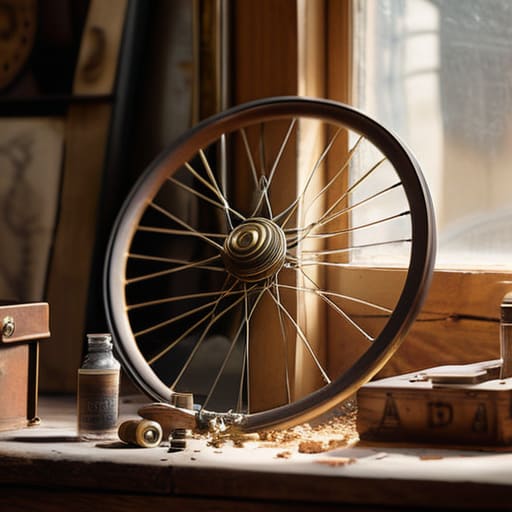
As we’ve explored, developing a signature style isn’t about inventing something out of thin air; it’s about the beautiful, messy process of curation. By looking backward to find inspiration in historical textures, blending seemingly disparate influences, and learning to listen to that quiet, inner voice, you aren’t just making art—you are building a visual language. Remember that your style is a living thing, much like one of my vintage bicycles that gains character with every mile and every careful restoration. It is the result of honoring your roots while having the courage to experiment with the unexpected, ensuring that every stroke or design choice feels authentically yours.
So, as you step away from this screen and back into your studio or your workspace, I want you to look at your surroundings with fresh eyes. Don’t be afraid of the weathered, the worn, or the seemingly discarded. Sometimes, the most profound breakthroughs come when we stop trying to be “perfect” and start trying to be sincere. Treat your creative journey like a collection of old, skeleton keys; each lesson learned and each technique mastered is a tool that will eventually unlock a door to a world only you can envision. Go forth and create something that tells your story, because the world is waiting to see the beauty only you can bring to light.